
VSTEP Writing Time Management: Splitting 60 Minutes Between Task 1 and Task 2
Why you need a time split before the test
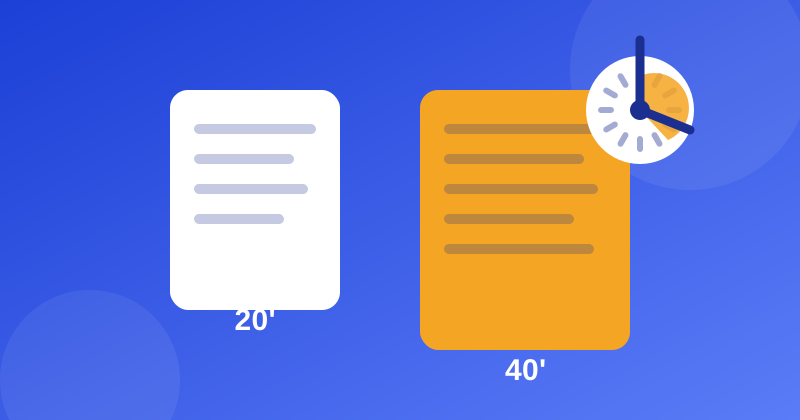
No one tells you to move from Task 1 to Task 2 - the full 60 minutes covers both tasks, and you decide when to stop one and start the other. Without a concrete time checkpoint in mind, the natural reaction is to keep writing the first task until it "feels done," which usually takes longer than planned and leaves too little time for Task 2, the task with greater weight in your score.
Suggested split: 20 minutes and 40 minutes
| Task | Requirement | Suggested time |
|---|---|---|
| Task 1 (letter/email) | 120+ words | ~20 minutes |
| Task 2 (essay) | 250+ words | ~40 minutes |
Task 2 is longer and carries more weight than Task 1, so most of your time should go there. If you can write letters quickly, you can trim Task 1 to 15-18 minutes to give Task 2 more room, but never do the opposite.
Break each task into smaller checkpoints
Instead of only remembering "20 minutes" and "40 minutes," set a checkpoint for each step so you don't lose track of time while writing:
- Task 1 (20 minutes): 2 minutes reading the prompt and deciding the tone, 15 minutes writing, 3 minutes checking.
- Task 2 (40 minutes): 5 minutes reading the prompt and planning, 30 minutes writing, 5 minutes checking.
Planning and checking time are the first things to get skipped when you're rushed, but they are the easiest way to gain points since they don't require writing a single extra word.
If you fall behind schedule
- If 20 minutes are up and Task 1's closing line isn't written, add one quick closing sentence and move to Task 2 right away - a letter missing its closing line still scores well on most criteria, while a short or conclusion-less Task 2 loses points across the whole task-fulfilment criterion.
- If you start Task 2 with under 35 minutes left, skip the detailed outline and jot down just your two main ideas before writing directly - the risk of drifting off-topic is smaller than the risk of not finishing all 4 paragraphs.
- Always save at least the last 2-3 minutes of Task 2 for checking spelling and tenses - these are the easiest errors to fix but the ones examiners most often deduct for under vocabulary and grammar.
Practice against the same checkpoints
When practicing at home, don't just time the full 60 minutes and write freely - time each checkpoint separately (for example, set an alarm at the 20-minute mark to force yourself to switch tasks), so your body gets used to the same time pressure as the real test. See Task 1 structure and Task 2's essay plan to write quickly and correctly from the start.